What Are the Best 90s JDM Cars for Tuning?

Last Updated: November 1, 2026
Quick Summary
The best 90s JDM cars for tuning are the Nissan Skyline GT-R R32 and R33, Toyota Supra Mk4, Mazda RX-7 FD, and Honda Civic and Integra Type R. Each clears four tests: tuning potential, aftermarket support, cost to build, and ownership risk. Beginners should start with the Civic, Integra, or Miata.
- The Skyline GT-R R32 and R33 set the all-wheel drive benchmark for 90s JDM cars.
- The Supra's 2JZ-GTE can build reliable 500-hp without opening the engine.
- A compression test is mandatory before buying an RX-7 FD rotary.
- The Civic is the best JDM project car for learning because mistakes are cheap.
- Start with maintenance before modification, learning fluids, brakes, and suspension basics.
Table of Contents
- How We Picked the Best 90s JDM Cars for Tuning
- The Four Criteria That Decide a Tuner Platform
- What We Left Off the List
- Nissan Skyline GT-R R32 and R33: The AWD Benchmark
- Toyota Supra Mk4 and Mazda RX-7 FD: Two Ways to Make Big Power
- Honda Civic and Integra Type R: Front-Wheel Drive Done Right
- Cheap 90s JDM Cars That Still Take a Beating
- Best JDM Project Cars for Beginners to Learn On
- 1990s JDM Cars With Aftermarket Support You Can Actually Order
- Your 90s JDM Car Buying Checklist Before You Hand Over Cash
- Frequently Asked Questions
How We Picked the Best 90s JDM Cars for Tuning
The best 90s JDM cars for tuning are the ones with strong engine internals, wide aftermarket support, and a chassis that rewards upgrades without punishing your wallet. Among car enthusiasts, the same three names come up most often: Skyline, Supra, and Civic. But the honest answer is messier than that.
Below, we break down which 90s JDM cars still make sense as tuning platforms in 2026, what each one costs to buy and build, and where the ownership risks hide. We'll also flag the cheap 90s JDM cars that take a beating and the beginner-friendly picks that won't drain a first-time builder's savings.
The core tension: nostalgia says buy the hero car, but parts availability and budget say otherwise. We'll show you how to balance both.
The Four Criteria That Decide a Tuner Platform
A car earns a spot on this list only if it clears four tests. Miss one, and it becomes a money pit instead of a project.
- Tuning potential: Does the stock engine and drivetrain handle more power before you rebuild everything?
- Aftermarket support: Can you actually order parts today, or are you hunting forums and overseas sellers?
- Cost to build: Purchase price plus the first round of mods, not just the sticker.
- Ownership risk: Reliability, maintenance intervals, and legal or emissions hurdles.
Aftermarket support matters a great deal when choosing a platform, because a great engine with no parts is a museum piece.
What We Left Off the List
Some icons didn't make the cut, and we'd rather say why than pad the list. Cars with thin parts networks or sky-high entry prices get a mention but no recommendation. We also skipped platforms where the stock drivetrain breaks well before the engine does, because that turns a budget build into a full swap.
The Four Criteria That Decide a Tuner Platform
The four criteria are tuning potential, aftermarket support, total build cost, and ownership risk. Each one filters out cars that look good in photos but fall apart in a garage. A platform that scores high on power but low on parts availability loses to a slower car you can actually maintain.
Nissan Skyline GT-R R32 and R33: The AWD Benchmark
The Skyline GT-R R32 and R33 set the all-wheel drive benchmark for 90s JDM cars, and nothing on this list matches their grip out of the box.
Supporting mods that matter more than power. The RB26's reputation for taking boost is real, but it is conditional.
Where the money actually goes. The purchase price is only the entry ticket.
Reliability trade-offs. A stock or lightly modified RB26 is a durable engine when maintained. The problems start when builders chase big power without addressing oil control, cooling, and fuel delivery.
Best for: builders who want AWD traction and don't mind the premium. Skip if: your budget is tight or you want a simple first project.
If the GT-R badge is the dream, the Dreams Have a Due Date racing tee is a fitting way to wear it while you save.

Toyota Supra Mk4 and Mazda RX-7 FD: Two Ways to Make Big Power
The Toyota Supra Mk4 and Mazda RX-7 FD represent two routes to big power, and they couldn't be more different. The Supra's 2JZ-GTE is a turbocharged inline-six with a reputation for taking boost and abuse. The RX-7's 13B rotary is light and rev-happy but demands attention.
Supra Mk4: the forgiving path. The 2JZ-GTE responds well to bolt-on upgrades, and the aftermarket is deep enough that you can build a reliable 500-hp car without opening the engine.
RX-7 FD: the demanding path. The 13B rotary is light and rewards a skilled driver, but it is a different ownership proposition.
Cost and ownership reality. Both cars are expensive to buy now, and both reward a careful pre-purchase inspection.
Which one for you? If you want reliable big power with a clear upgrade path, the Supra is the easier platform.
Cars and Coffee Graphic T-Shirt →
Best for: Supra for reliable power, RX-7 for handling and character. Skip if: you can't stomach rotary maintenance or six-cylinder parts prices.
Big-power talk deserves the right shirt: the "Spools Before Fools" turbo tee and the "Dreamed It. Built It. Now We Go." Supra graphic tee both fit the section's subject.

Honda Civic and Integra Type R: Front-Wheel Drive Done Right
The Honda Civic and Integra Type R prove front-wheel drive can be a serious tuning platform. The B-series engines are cheap to work on, parts are everywhere, and the chassis is light. A well-sorted Civic hatchback or Integra Type R handles like a go-kart and costs far less to build than the heroes above.
The tradeoff is power ceiling. The B-series makes strong naturally aspirated power, but big forced induction numbers require a built engine. For beginners, that's fine. The Civic is the best JDM project car for learning because mistakes are cheap and the community knowledge is enormous.
Best for: first-time builders and budget tuners. Skip if: you want big turbo power without an engine swap.
Cheap 90s JDM Cars That Still Take a Beating
Cheap 90s JDM cars that still take a beating share one trait: simple, durable engines and a chassis that forgives rough roads. The Civic and Integra lead here, but the Miata belongs in the conversation too. Lightweight, rear-wheel drive, and cheap to maintain, the Miata teaches handling without a big budget.
The real difference between a cheap build and a money pit comes down to inspection. Rust, tired suspension, and deferred maintenance cost more than the car itself. We'd rather buy a clean shell with a tired engine than a shiny car with hidden rot.
If you're planning a budget project build, the "Because Stock Is Boring" project tee matches the stock-is-boring tuner mindset.

Best JDM Project Cars for Beginners to Learn On
The best JDM project cars for beginners are the ones where parts are cheap, mistakes are recoverable, and the community has already solved your problem. The Civic, Integra, and Miata all qualify. Each has a large aftermarket, simple drivetrains, and strong forum support.
Start with maintenance before modification. A beginner who learns fluid changes, brake work, and suspension basics will get more from a project car than one who jumps straight to a turbo kit. That order matters.
1990s JDM Cars With Aftermarket Support You Can Actually Order
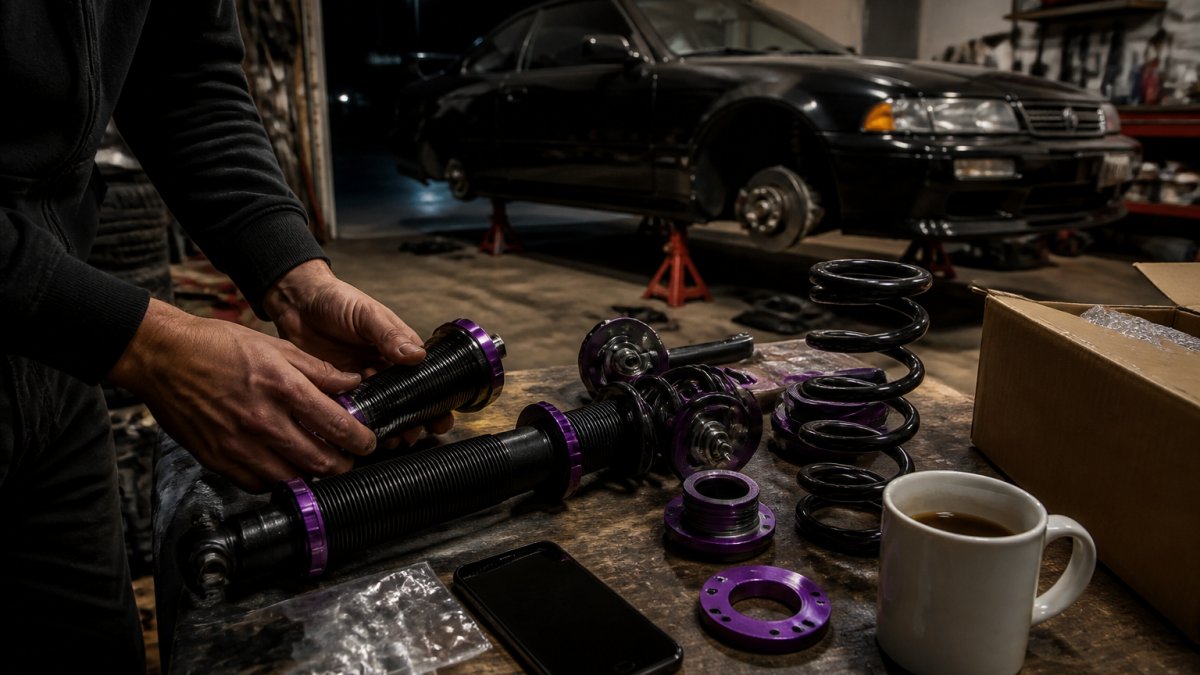
Aftermarket support is where 1990s JDM cars separate into two groups: those you can order parts for today and those you can't. The Civic, Integra, Miata, Supra, and Skyline all have active supply chains. Suspension, brakes, engine upgrades, and forced induction kits are available from multiple sellers.
Parts availability changes by generation, though. Verify fitment before ordering, and check whether the part is in stock or a long lead item. A cheap part that arrives in three months isn't cheap if it stalls your build.
| Platform | Tuning Potential | Parts Availability | Ownership Risk | Best For |
|---|---|---|---|---|
| Skyline GT-R R32/R33 | High | Moderate, pricey | High cost, complex AWD | AWD traction builds |
| Supra Mk4 | High | Strong | Expensive entry | Reliable big power |
| RX-7 FD | High | Moderate | Rotary maintenance | Handling-focused builds |
| Civic / Integra Type R | Moderate | Excellent | Low, cheap mistakes | Beginners, budget builds |
| Miata | Moderate | Excellent | Low | Learning handling |
Your 90s JDM Car Buying Checklist Before You Hand Over Cash
Use this checklist before you hand over cash. It won't catch everything, but it catches the expensive stuff.
- Compression test on every cylinder, with numbers written down
- Check for rust in the sills, floor pans, strut towers, and rear arches
- Verify the engine and chassis numbers match the paperwork
- Confirm parts availability for the specific generation before you commit
- Budget the first round of maintenance, not just the purchase price
- Check legal, import, and emissions requirements for your area
- Inspect the suspension and bushings for wear
- Ask for service records and a cold-start video
The most common mistake is buying on emotion and inspecting later. A car that looks clean at a meet can hide rot underneath.
Frequently Asked Questions
Which 90s JDM car is the cheapest to modify?
The Honda Civic EG and EK generations are usually the cheapest to modify because parts are everywhere and a used D-series or B-series engine costs less than most single turbo kits for other platforms. Coilovers, brakes and wheels are all widely available at low prices. A Mazda MX-5 is close behind. Set a realistic total build budget rather than just the purchase price, because a cheap car with a tired shell often costs more in welding and bushes than the drivetrain does.
What is the best 90s JDM car for a first project?
A naturally aspirated Honda Civic or Integra is the safest first project. The engines are simple, parts are cheap, and mistakes are easy to undo. If you want rear-wheel drive, a Mazda MX-5 or an early Nissan Silvia teaches car control without a big power bill. Avoid starting with a twin-turbo car: the extra plumbing, heat and tuning cost turns a first build into an expensive lesson in diagnostics.
Which 1990s Japanese cars have the most aftermarket support?
The Nissan Skyline GT-R, Toyota Supra Mk4, Mazda RX-7 FD, Honda Civic and Integra Type R all have deep aftermarket support, with parts catalogues covering everything from bushes to full turbo kits. The Skyline and Supra have the widest range of engine and drivetrain upgrades. Civics win on price and availability. Before buying any 90s JDM car, check that the specific generation and trim you want has parts listed, because trim differences often mean a part that fits one model will not fit another.
What should I check before buying a 90s JDM project car?
Work through a 90s JDM car buying checklist: rust in the sills, floor pans, strut towers and rear arches; compression and leak-down results; turbo condition and shaft play; gearbox synchros; and whether the wiring has been cut for old alarms or boost controllers. Ask for the import paperwork and check the chassis plate matches the VIN. Budget for a full fluid and bush refresh on any car over 25 years old, and get an inspection from a specialist who knows the model.
Are 90s JDM cars expensive to insure and maintain?
Insurance and maintenance costs depend more on the model than the decade. A Civic or MX-5 is cheap to insure and service, while a Skyline GT-R or Supra Mk4 carries higher premiums and parts prices. Maintenance on any 90s JDM car means age-related work: timing belts, coolant hoses, engine mounts and suspension bushes. Modified cars often need a specialist policy. Get quotes before you buy, and keep a maintenance fund separate from the build budget.
The hard part isn't picking a car. It's staying honest about the budget, the parts, and the maintenance a 90s JDM platform demands. Midnight Motor Club builds apparel for people who live for the drive, with heavyweight 6.1 oz ring-spun cotton tees, garment-dyed finishes, and double-needle stitching that hold up to garage nights and meet weekends. Get started with Midnight Motor Club and wear the build you're chasing.
