
Table of Contents
- Why Graphic Tees Fade, Crack, and Peel
- How to Wash Graphic Tees Properly: Step-by-Step
- The Best Detergent for Screen Printed Shirts
- Air Drying vs Machine Drying Graphic Tees
- How to Fix a Cracked Graphic Tee Print
- Print Types Matter: DTG, Screen Print, and Vinyl Care
- Conclusion
- Frequently Asked Questions
Last Updated: October 2, 2026
Why Graphic Tees Fade, Crack, and Peel
The print on a graphic tee is the first thing to go, and heat is usually the reason. Every wash cycle pulls at the ink; hot water and a hot dryer speed that up, and friction from other clothes breaks the design down.
Here's what causes each one:
- Fading: hot water, bleach, and optical brighteners strip color from the ink
- Cracking: high dryer heat makes the ink brittle, then it splits
- Peeling: friction and detergent residue break the bond between ink and cotton
How to Wash Graphic Tees Properly: Step-by-Step
The short answer: turn the shirt inside out, wash cold on a gentle cycle with mild detergent, then air dry. Four habits, and most print damage never happens.
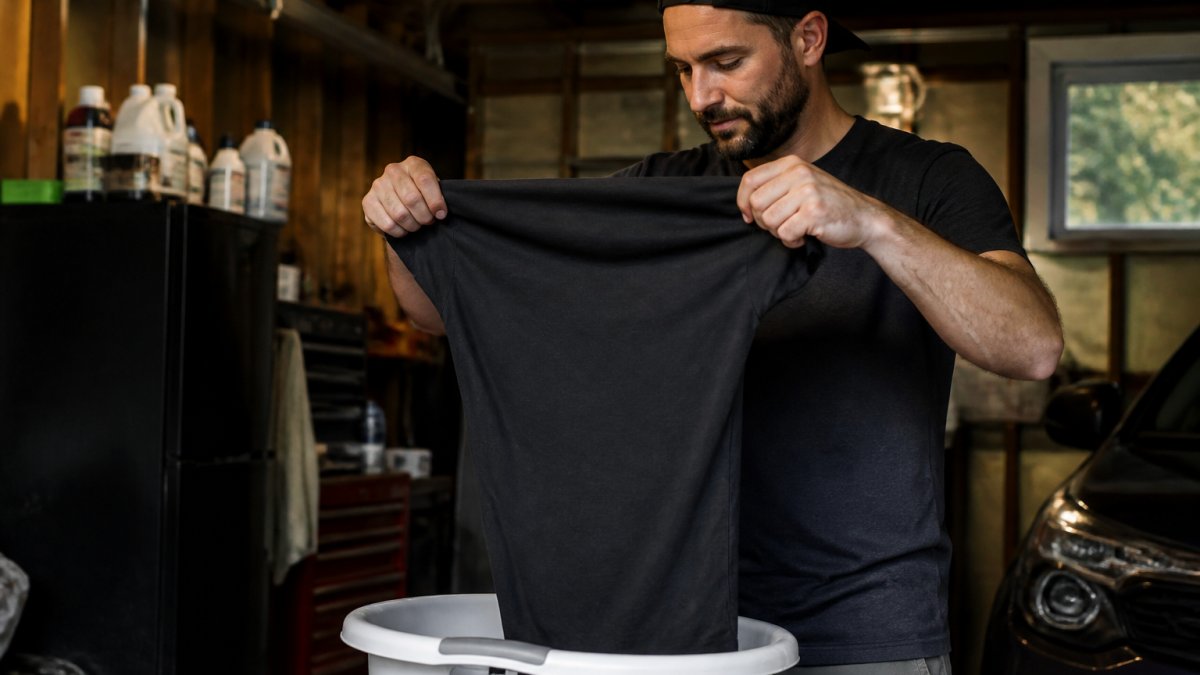
Step 1: Turn the Shirt Inside Out
Flip the tee inside out before it goes near the machine, putting fabric between the print and everything else in the drum. When the graphic faces outward, it rubs against zippers, buttons, and other shirts for the whole cycle; inside out, the ink stays protected.
Step 2: Wash Cold on a Gentle or Delicate Cycle
Set the water temperature to cold and the cycle to gentle or delicate. Cold water protects the ink, and a gentle cycle cuts down on friction and spin speed. Most machines default to warm, change it. Cold water cleans everyday sweat and dirt just fine and keeps colors from bleeding.
Step 3: Skip Bleach, Optical Brighteners, and Fabric Softener
Leave all three out. Bleach fades ink fast, optical brighteners do the same thing more slowly, and fabric softener leaves a coating that weakens the print's bond over time. Use a mild detergent instead, one small capful is plenty. Too much leaves residue that traps dirt and dulls the design.
The Best Detergent for Screen Printed Shirts
The best detergent for screen printed shirts is a mild, liquid, dye-free formula with no bleach and no optical brighteners. Liquid dissolves better than powder in cold water.
Check the label for these words:
- "Free and clear" or "free of dyes and perfumes"
- "HE" if you have a high-efficiency machine
- No "with bleach" or "whitening" claims
Air Drying vs Machine Drying Graphic Tees
Air drying is the single best thing you can do for a graphic tee. Heat is what cracks and peels prints, and a dryer is the hottest place your shirt goes. But how you air dry matters as much as whether you do.

If You Must Use a Dryer
Sometimes you need the shirt dry in 30 minutes. You can still limit the damage:
- Set the dryer to the lowest heat setting it offers, or use an "air fluff" / "no heat" cycle if your machine has one.
- Keep the shirt inside out so the print faces the drum wall, not other clothes.
- Add a couple of clean tennis balls or dryer balls to reduce tumbling friction between garments.
- Pull the shirt out slightly damp, usually 10 to 15 minutes before the cycle ends, and hang it to finish. The residual heat and airflow will dry the rest without baking the print.
- Never use dryer sheets. They leave the same waxy coating as fabric softener and weaken the ink-to-fabric bond.
How to Air Dry Without Wrecking the Shirt
Air drying has its own failure modes:
- Hang by the hem, not the collar. Hanging a wet tee by the collar stretches the neckline and pulls the shoulders out of shape. Clip the hem or drape it over a rack bar.
- Lay flat for heavy cotton. Heavyweight tees and garment-dyed shirts hold a lot of water. Laying them flat on a clean towel or mesh rack keeps the shape and speeds drying.
- Keep it out of direct sun. UV light fades ink the same way bleach does. A shaded line or an indoor rack is safer than a sunny balcony.
- Use a fan for faster drying. A box fan pointed at the shirt cuts drying time significantly without any heat. This is the single best trick for people who air dry indoors.
- Don't dry over a heater or radiator. Radiant heat from below can bake the print even without a dryer.
The Middle Path: Air Dry, Then Fluff
If your shirt comes out stiff or wrinkled after air drying, run it on "air fluff" (no heat) for 5 to 10 minutes with a clean, dry towel. The towel absorbs moisture and the tumbling softens the fabric without heat, the closest thing to a free lunch in graphic tee care.
While The World Sleeps We Build T-Shirt | Motivational Typographic Tee →
How to Fix a Cracked Graphic Tee Print
You can't fully reverse a cracked print, but you can slow it down and make it look better. A cracked design is dry and brittle, so the fix is gentle heat and pressure, not more washing.
Try this:
- Turn the shirt inside out and lay it flat on an ironing board
- Cover the print area with a thin cotton cloth or parchment paper
- Press with a warm iron for 10-15 seconds, no steam
- Let it cool, then check the print
Print Types Matter: DTG, Screen Print, and Vinyl Care
Not every graphic tee is printed the same way, and the ink type changes how you should treat it, care advice written for one method can hurt another. Most guides treat all graphics the same, which is why so many people ruin shirts that should have lasted years.
| Print Type | How It's Made | Main Weakness | Best Care Move |
|---|---|---|---|
| DTG (direct to garment) | Ink sprayed into fabric fibers | Fading from heat and bleach | Cold wash, air dry |
| Screen print | Ink pressed through a mesh screen | Cracking from dryer heat | Low heat, inside out |
| Vinyl / heat transfer | Adhesive film pressed on top | Peeling at the edges | No dryer heat, no softener |
DTG (Direct to Garment)
Direct to garment (DTG) prints sit inside the fabric, so they feel soft and fade more than they crack. The water-based ink bonds with the cotton fibers rather than sitting on top, which is why a DTG print feels almost like part of the shirt. The trade-off is color depth: DTG inks are thinner and fade faster than screen print when exposed to heat, bleach, or optical brighteners.
Screen Print
Screen print lays a thicker layer of ink on top of the fabric. It is durable but cracks when it gets too hot. The ink is usually plastisol, a PVC-based compound cured at high temperatures during manufacturing; once cured it is flexible, until heat makes it brittle again. Screen print is the most common method for band tees, event shirts, and bold, opaque colors.
Vinyl and Heat Transfer
Vinyl and heat transfer prints are a film bonded with adhesive, and heat and fabric softener both break that bond, which is why peeling starts at the edges. Vinyl is common on sports numbers, names, and simple one-color designs. The adhesive is the weak point: fabric softener leaves a coating that prevents it from gripping, and dryer heat softens it and lets the edges lift.
Why This Matters for Your Wash Routine
If you do not know your shirt's print type, default to the most conservative routine: cold wash, inside out, mild detergent, air dry. That is safe for all three print types; the differences only matter when troubleshooting or extending the life of a specific shirt.
Conclusion
A graphic tee is a small piece of your identity. Treat it like one, the care routine is simple and costs nothing but a few extra seconds at the machine.
Frequently Asked Questions
Are you supposed to wash graphic tees inside out?
Yes. Turning the shirt inside out puts the fabric between the print and everything else in the drum. That cuts the friction that rubs ink against zippers, buttons, and other garments, which is the main cause of cracking and peeling. Keep it inside out through the whole wash cycle, then leave it that way while it air dries so the print never scrapes against a drying rack or drum.
What type of detergent should I use to wash graphic tees?
Use a mild, liquid detergent with no bleach and no optical brighteners. Powders can leave residue that dulls a print, and brighteners are designed to make whites look whiter, which fades colored ink over time. A small amount goes a long way: too much detergent leaves residue trapped in the fabric, and that residue is what makes prints look cloudy after a few months. Cold water plus a mild liquid detergent handles everyday sweat and dust without stressing the graphic.
Is it okay to put graphic tees in the dryer?
It shortens their life. High heat breaks down the adhesive and ink that hold a print in place, and tumble friction speeds up cracking. If you must use a machine, choose the lowest heat setting and pull the shirt out while it is still slightly damp. Air drying flat or on a line keeps the print intact and prevents the shrinkage that comes with repeated high-heat cycles. For heavyweight cotton tees, air drying also preserves the fit you bought them for.
Can you use fabric softener on graphic tees?
No. Fabric softener coats fibers in a waxy film, and that film sits on top of the print too. Over time the graphic looks dull and the ink loses its grip on the fabric, which leads to peeling at the edges. Dryer sheets cause the same problem. Skip both and let a mild detergent do the work. If static is an issue, a low tumble dry or air drying solves it without coating the shirt.