
Last Updated: October 23, 2026
Quick Summary
Car shirts crack mainly because heat and friction break down print adhesion over time, often worsened by undercured ink or hot dryer cycles. Prevent it by washing inside out in cold water on a gentle cycle and air-drying instead of using high heat.
- Plastisol ink needs to reach roughly 320 degrees Fahrenheit to bond permanently to fabric.
- Turn graphic tees inside out and wash in cold water on a short, low-spin gentle cycle.
- Skip bleach and fabric softener, which weaken print adhesion over time.
- Air-dry shirts inside out away from direct sun; if using a dryer, choose the lowest heat setting.
- If a shirt cracks after the first wash, contact the seller because it is likely a defect.
Table of Contents
- Why Car Shirts Crack After Washing: The Main Causes
- How to Wash Graphic Tees Properly (Step-by-Step)
- How to Dry Graphic Tees Without Cracking the Print
- How to Wash DTF Shirts: Special Care for Direct-to-Film Prints
- How to Fix Cracked Screen Print (What Actually Works)
- Is It a Manufacturing Defect or Wash Damage? How to Tell
- Fabric, Fit, and Construction: What to Look For Before You Buy
- Conclusion
- Frequently Asked Questions
Why Car Shirts Crack After Washing: The Main Causes
A car shirts crack is almost never bad luck. It comes down to how the ink was applied, how it was cured, and how the shirt is washed and dried. Most cracking is preventable, and the fix starts with understanding the cause.
Here's the short version: heat and friction break down print adhesion over time. The print sits on top of the fabric, so every stretch, spin, and tumble pulls at it.
Let's look at the two biggest culprits.
Undercured Ink and Curing Temperature Problems
Ink curing is the process of heating a printed design to a set temperature so the ink bonds permanently to the fabric. When ink isn't cured fully, it never fully bonds.
Plastisol ink, the standard for screen printing, needs to reach roughly 320 degrees Fahrenheit across the whole ink layer. A press that runs too cool, or a shirt that moves through the heat too fast, leaves the ink undercured.
This is a production issue, not a washing issue. If your shirt cracked after the first wash, undercuring is a likely suspect.
Heat, Dryers, and Rough Handling
Heat is the enemy of a printed design. A hot dryer softens the ink, then the tumbling action pulls and folds it while it's vulnerable. Over time, that stress shows up as cracks along fold lines.
Rough handling adds to the problem:
- Zippers and buttons from other clothes snag the print
- Overloading the machine increases friction
- Hot water breaks down the ink's flexibility
- High heat in the dryer speeds up cracking
The fix is simple: cold water, low heat, and less friction. More on that below.
How to Wash Graphic Tees Properly (Step-by-Step)
Learning how to wash graphic tees properly is the best defense against cracking. The goal is to reduce heat, friction, and pressure on the print. Here's the routine we recommend.
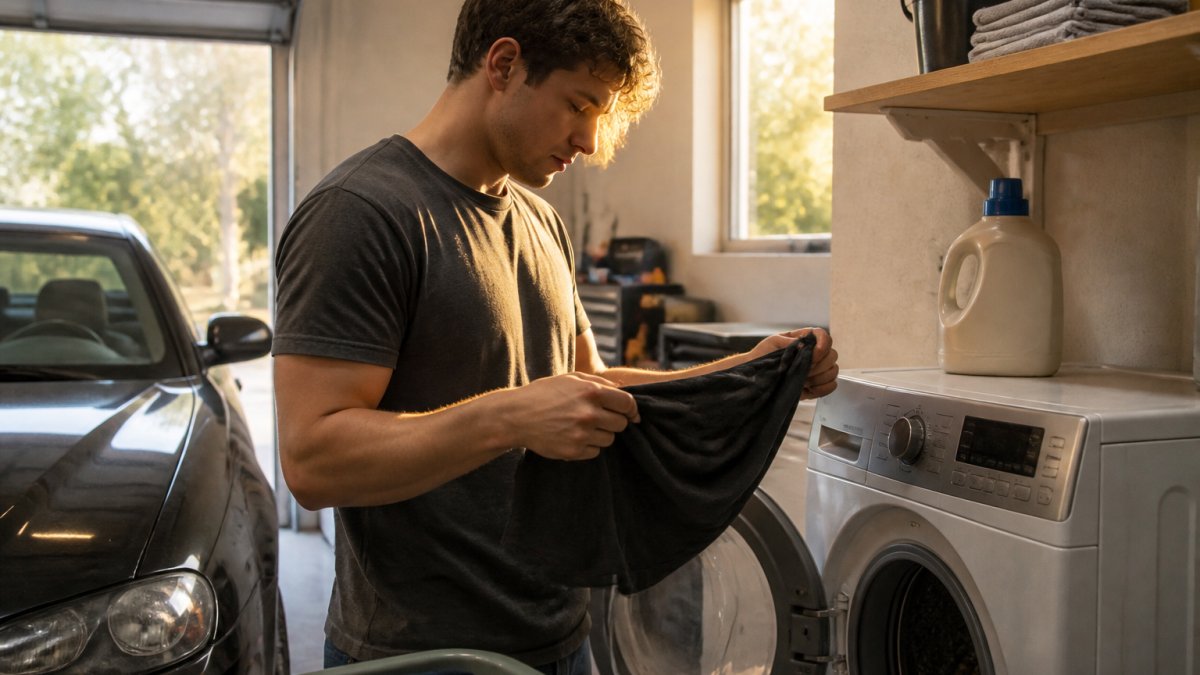
- Turn the shirt inside out. This puts the print against itself, not against other clothes.
- Use cold water. Cold water protects ink flexibility and reduces shirt shrinkage.
- Pick a gentle cycle. A short, low-spin cycle means less fabric movement.
- Use mild detergent. Skip bleach and fabric softener, which weaken print adhesion.
- Wash with similar items. Avoid zippers, buttons, and rough fabrics that snag.
- Don't overload the machine. A crowded drum means more friction and pressure.
One insider tip: wash graphic tees in small loads separate from jeans and towels. It sounds fussy, but it makes a real difference to print durability.
How to Dry Graphic Tees Without Cracking the Print
The safest way to dry graphic tees is air-drying. Hang the shirt inside out on a line or a hanger, away from direct sun. Air-drying removes heat and tumbling from the equation entirely.
If you must use a dryer, follow these rules:
- Set it to the lowest heat setting or air-fluff
- Keep the shirt inside out
- Remove it while still slightly damp
- Never let it sit in a hot dryer after the cycle ends
High heat is what makes ink brittle. Once the print loses flexibility, cracks follow. Air-drying keeps the ink soft and the design intact far longer.
How to Wash DTF Shirts: Special Care for Direct-to-Film Prints
DTF (direct-to-film) prints fail differently from screen prints, so they deserve their own care routine. A DTF transfer is a printed film of pigment and adhesive that is heat-pressed onto the garment.
Here is what is actually happening and how to wash DTF shirts safely:
- Turn the shirt inside out before every wash. DTF prints sit on top of the fabric and are more abrasion-sensitive than a fully cured plastisol layer. Inside-out washing keeps the print from rubbing against zippers, buttons, and other garments.
- Use cold water on a gentle cycle. Heat softens the adhesive layer. Cold water keeps the bond stable and reduces fabric shrinkage that can pull at the print.
- Skip fabric softener and dryer sheets. Softeners leave a coating that can interfere with the adhesive bond and reduce the print's flexibility over time.
- Wash separately for the first wash. A first wash is the real test of a DTF transfer. Washing it alone lets you see whether any transfer issues appear without blaming other garments.
- Air-dry whenever possible. If you must use a dryer, use the lowest heat setting or air-fluff and remove the shirt while still slightly damp. High heat is the most common cause of DTF edge lifting and fine cracking.
- Never iron directly on the print. If you need to remove wrinkles, iron the shirt inside out on a low setting or use a pressing cloth. Direct heat can re-soften the adhesive and distort the film.
A useful diagnostic: if a DTF print shows fine cracks across the whole design after the first wash, suspect a weak transfer or insufficient press pressure rather than your laundry routine. If it shows edge lifting after months of hot drying, that is heat damage you can prevent going forward.
How to Fix Cracked Screen Print (What Actually Works)
Learning how to fix cracked screen print starts with honesty: a cracked print cannot be fully restored. The ink has physically separated. But you can slow the damage and keep the shirt wearable.
What actually helps:
- Stop the heat. Switch to cold washing and air-drying immediately.
- Iron inside out on low. A cool iron on the reverse side can relax minor creases, but never press directly on the design.
- Trim loose flakes. Snip any peeling edges with small scissors so they don't catch and tear further.
- Reframe it as distressing. A light, even crack can read as vintage. Many car culture designs look better with age.
What doesn't work: iron-on patches, fabric glue, and sharpie touch-ups. They look worse than the crack and often make peeling worse.
Is It a Manufacturing Defect or Wash Damage? How to Tell
Telling a defect from wash damage comes down to timing and pattern. A defect shows up early and often evenly. Wash damage builds over time and follows fold lines.
Use this quick diagnostic:
| Sign | Likely Cause | What It Means |
|---|---|---|
| Cracks after first wash | Undercured ink or poor adhesion | Manufacturing defect |
| Peeling at edges, lifting off fabric | Weak print adhesion | Defect or faulty transfer |
| Cracks along fold lines only | Heat and dryer damage | Wash-related |
| Fading plus cracking | Harsh detergent or hot water | Wash-related |
| Cracks across the whole design | Under-cured ink layer | Defect |
| Cracks near seams and stress points | Fabric stretch and movement | Normal wear or fit issue |
If a shirt cracks after the first wash, contact the seller. That's a defect, not your fault. If it cracks after months of hot drying, that's a care issue you can fix going forward.
Fabric, Fit, and Construction: What to Look For Before You Buy
Print durability starts with the garment, and the reason comes down to mechanics.
Here is what to check before you buy, and why it matters:
- Fabric weight. Heavier cotton (think 5.5 oz and up) moves less under the print and holds its shape through repeated washes. Lighter fabrics stretch more easily, and that movement transfers directly to the ink layer.
- Blend content. A small amount of polyester or rayon can add softness, but high-stretch blends move more under the print. If the shirt stretches noticeably across the chest, the print will too.
- Print thickness. A thick plastisol layer sits on top of the fabric and cracks visibly along fold lines. A thinner, more flexible ink layer moves with the shirt and shows less cracking. This is a trade-off: thicker prints feel more substantial but are less forgiving.
- Fit. A tight shirt stretches across the chest and shoulders, and those are the first places prints fail. A shirt that fits with a little room moves less under the design.
- Construction details. Look at how the shirt is cut and sewn. A garment that holds its shape after washing puts less stress on the print. Care instructions from the brand are also a signal: a maker who prints clear guidance usually understands print durability.
A practical test before you buy: hold the shirt up and stretch the area where the print sits. If the fabric moves easily and the print feels stiff, that print is more likely to crack over time.
This is where honest materials matter. Our car shirts are built around clean designs and fabrics chosen to hold up to real wear.
Conclusion
Cracked car shirts are frustrating, but they're rarely a mystery. Undercured ink, hot dryers, and rough handling cause most of the damage, and the fix is a simple care routine: cold water, inside out, air-dry, no direct heat.
If you want graphic tees built to last, our car shirts use clean designs and honest materials, made for people who live for the drive. Check out the collection and find a shirt that keeps its print wash after wash.
Frequently Asked Questions
Why do graphic shirts crack after washing?
Graphic shirts crack for several reasons: undercured ink that never fully bonded to the fabric, excessive heat from hot water or a dryer, rough agitation in the wash cycle, and fabric stretch that pulls the print apart over time. Print thickness also matters, since thick plastisol ink sits on top of the fabric and cracks more easily than thin, flexible inks. Washing inside out in cold water and air-drying are the two habits that prevent most car shirts crack issues.
Should you turn graphic shirts inside out before washing?
Yes. Turning graphic tees inside out protects the printed design from friction against other garments and the washing machine drum. This simple step reduces surface abrasion that wears down ink and causes cracking or peeling. Pair it with a cold, gentle cycle and a mild detergent, and your print will hold up far longer than if you wash it right-side out with heavy items like jeans.
Can you fix a cracked screen-printed shirt?
You cannot fully reverse a crack in screen print, but you can slow further damage. Wash the shirt inside out in cold water, avoid the dryer entirely, and never iron directly on the print. For minor cracks, some people use a fabric marker to touch up the color, though results vary. The better approach is prevention: proper washing and drying from the first wear keeps the ink flexible and intact.
Does putting graphic tees in the dryer make them crack?
High dryer heat is one of the most common causes of cracked prints. Heat makes the ink brittle and causes the fabric to shrink, which stretches and stresses the design. If you must use a dryer, choose the lowest heat setting and remove the shirt while slightly damp. Air-drying flat or on a hanger is the safest option for any graphic tee you want to keep looking new.
