
Table of Contents
- Why Premium Graphic Tees Last Longer: The Short Answer
- High-Quality Graphic Tees Start With Heavier, Denser Cotton
- Print Adhesion, Ink Chemistry, and What Makes a Graphic Crack
- How to Wash Graphic Tees Properly So the Print Survives
- How to Prevent Graphic Tee Prints From Cracking After the Wash
- How Long Should a T-Shirt Last? Realistic Numbers by Fabric and Care
- Water Hardness, Fiber Pilling, and the Eco-Friendly Laundry Swap
- Conclusion: Pay Once for a Tee You Keep Wearing
- Frequently Asked Questions
Last Updated: October 7, 2026
Why Premium Graphic Tees Last Longer: The Short Answer
Premium graphic tees last longer because they start with heavier, denser cotton and better print methods, which resist friction, fading, and cracking far better than thin budget shirts. At Midnight Motor Club, we build our tees around this idea: honest materials and clean design that survive real wear.

A cheap tee uses thin fabric and a thin ink layer, both of which break down fast. A premium graphic tee uses heavier cotton and a print that actually bonds to the fabric, so you keep wearing it for years, not months.
This guide covers fabric weight, ink chemistry, washing habits, and realistic lifespan numbers.
High-Quality Graphic Tees Start With Heavier, Denser Cotton
Fabric weight is the single biggest predictor of how a tee ages. Heavier cotton holds its shape, resists pilling, and stands up to repeated washing.
Fabric weight is measured in ounces per square yard (oz). A budget tee often sits around 4.5 oz; a premium graphic tee usually runs 5.5 oz or higher. Midnight Motor Club's heavyweight tee uses 6.1 oz cotton.
Thicker yarn means more fiber per square inch, and that extra density slows the friction that wears fabric thin.
Fabric Weight, Thread Count, and Why Cheap Tees Thin Out
Cheap tees cut corners on both, using lighter yarn and looser weaves that leave gaps where friction and pilling start.
Pilling happens when short fibers work loose and tangle into little balls. Denser, longer-staple cotton resists this.
- Heavier fabric (6 oz+): holds shape, resists thinning
- Combed cotton: fewer short fibers, less pilling
- Tighter weave: smoother surface, better print adhesion
- Ring-spun cotton: softer hand, stronger yarn
A premium tee also tends to use double-needle stitching and a tubular knit, which stop seams from twisting or splitting after repeated washes.
Print Adhesion, Ink Chemistry, and What Makes a Graphic Crack
Print cracking comes down to how well the ink bonds to the fabric. If the bond is weak, the print peels or splits when the shirt stretches.
There are three print methods you'll see on graphic tees, and each one fails differently:
Screen printing pushes a thick plastisol ink through a mesh screen, then cures it at roughly 320°F (160°C). Plastisol is a PVC-based ink suspended in plasticizer. During curing, the plasticizer fuses the PVC particles into a solid film that mechanically locks into the cotton weave. Done right, that film stretches with the shirt and lasts years. Done cheaply, undercured, too thin, or flashed too fast, the plasticizer never fully fuses, and the ink sits on the surface like a sticker waiting to peel.
Direct-to-garment (DTG) printing sprays water-based ink onto the shirt, then cures it with heat.
Vinyl (heat transfer) printing cuts a design from a polyurethane or PVC sheet and heat-presses it onto the shirt.
The print method determines the failure mode, and the failure mode determines how you should care for the shirt.
- Screen print (plastisol): durable if cured properly; fails by peeling if undercured
- DTG (water-based): soft hand, bonds into fibers; fails by fading if washed hot or with harsh detergent
- Vinyl (heat transfer): most crack-prone; fails by splitting along stretch lines
How Heat, Friction, and Spin Speed Break Down Print Adhesion
Heat attacks each ink type differently. High dryer temperatures make plastisol brittle, the plasticizer cooks off and the ink cracks the moment the fabric flexes.
Spin speed matters too. A fast spin stretches and twists the fabric, pulling at the ink layer, especially on thinner shirts.
- High heat: cooks plasticizer out of plastisol, breaks DTG's fiber bond, softens vinyl edges
- Tumble friction: abrades plastisol surface, catches vinyl edges
- Fast spin: stretches thin fabric, stressing the ink-to-fiber interface
- Harsh detergent: breaks down the ink's chemical structure, especially on water-based prints
The same forces that wear out fabric also wear out the print, so protecting one protects the other, if you know which ink you're protecting.
How to Wash Graphic Tees Properly So the Print Survives
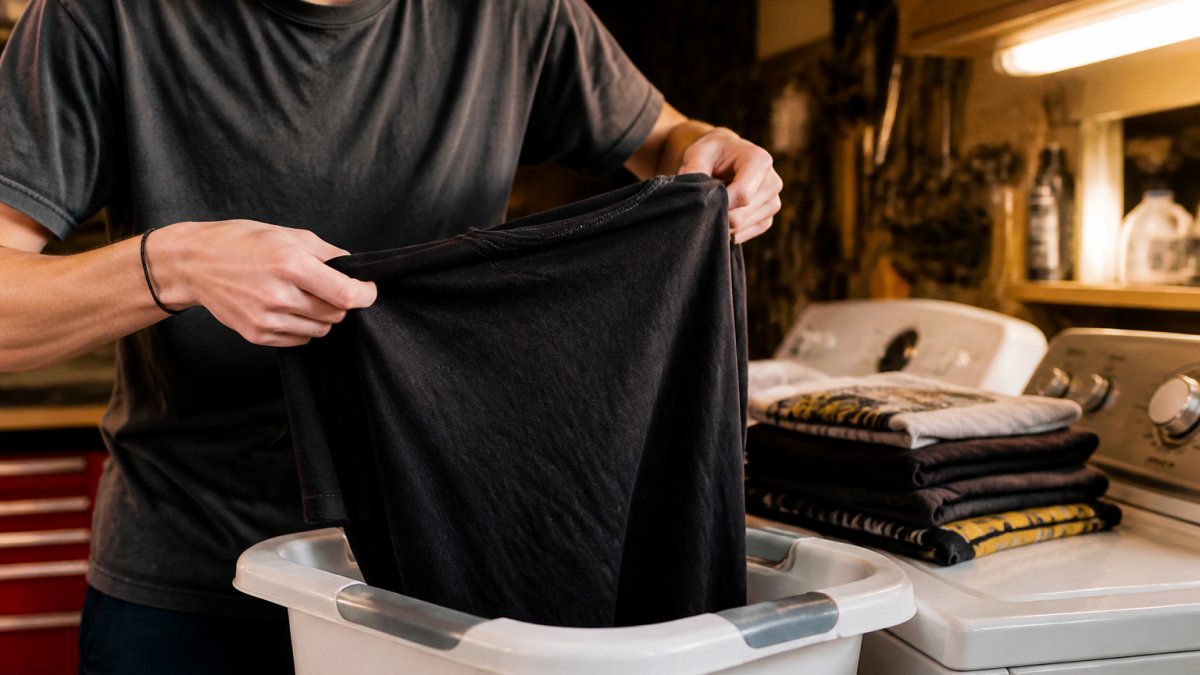
Washing graphic tees properly means cold water, a gentle cycle, and turning the shirt inside out. These three habits alone can add years to a printed tee.
Here's the full routine we recommend:
- Turn the shirt inside out. This puts the print against itself, not against other clothes.
- Use cold water. Cold water (max 30C or 90F) protects both ink and fabric.
- Pick a gentle cycle. Lower agitation means less friction on the print.
- Skip bleach and fabric softener. Both break down ink and cotton fibers.
- Wash with similar colors. This cuts dye transfer and reduces friction damage.
- Air dry when you can. If you must use a dryer, go low heat.
How to Prevent Graphic Tee Prints From Cracking After the Wash
Preventing cracks starts before the shirt hits the water: check the care label first, then build habits around it.
Most print damage happens in three places: the dryer, the detergent, and the iron. Fix those and your graphic lasts far longer.
While The World Sleeps We Build T-Shirt | Motivational Typographic Tee →
- Air dry or tumble dry low. Never high heat.
- Turn inside out every single wash. Not just sometimes.
- Avoid bleach and fabric softener. Both attack the ink layer.
- Never iron directly on the print. If needed, iron the reverse side on low.
- Wash less often. Spot clean small marks instead of a full wash.
Spot cleaning is the habit most people skip: a small stain doesn't need a full cycle. Dab it with cold water and mild detergent, then air dry.
How Long Should a T-Shirt Last? Realistic Numbers by Fabric and Care
A well-made graphic tee can last several years with proper care. A cheap tee often shows real wear within a year. The gap comes down to fabric weight and how you wash it.
There's no single number because care habits vary, but the pattern is clear: heavier cotton plus gentle washing equals a longer life.
Here's how different care habits affect a shirt's lifespan:
| Care Habit | Effect on the Print | Effect on the Fabric |
|---|---|---|
| Cold wash, inside out, air dry | Minimal wear over years | Holds shape and color |
| Warm wash, tumble dry low | Slow cracking over time | Some shrinkage possible |
| Hot wash, high heat dry | Fast cracking and peeling | Thinning and pilling |
| Bleach or fabric softener | Breaks down the ink | Weakens cotton fibers |
The pattern is simple. The gentler the routine, the longer the shirt lasts. A premium tee washed well can outlast three cheap tees washed badly.
Water Hardness, Fiber Pilling, and the Eco-Friendly Laundry Swap
Water hardness affects how your detergent works, and that affects your shirts.
Those deposits do two things: they coat individual fibers so cotton feels stiff and rough over time, and they trap detergent residue and body oils inside the weave.
If your shirts feel scratchy after washing, especially if they felt soft when new, hard water is a likely cause.
The Science of Fiber Pilling (and Why Combed Cotton Resists It)
Pilling is the other quiet killer, and understanding it mechanically explains why premium cotton behaves differently.
Here's why that matters. Pilling happens in three stages:
- Fiber migration. During wash and wear, short fibers work their way loose from the yarn structure and migrate to the surface.
- Entanglement. Those loose fibers tangle with each other and with fibers from neighboring yarns, forming a small knot, the pill.
- Anchor or shed. If the pill is anchored by a long fiber, it stays on the surface and looks bad. If it's anchored only by short fibers, it eventually sheds.
Carded cotton has more short fibers, so it produces more pills that anchor more easily.
That's why a 6.1 oz ring-spun combed cotton tee resists pilling far better than a 4.5 oz carded tee, even after dozens of washes, the difference is fiber length and yarn structure, not marketing.
Eco-Friendly Laundry Swaps That Also Extend Shirt Life
The habits that protect your shirts also cut your environmental footprint, both come down to using less heat, less agitation, and less chemistry.
- Cold water saves the energy a washer would use to heat the water (typically 75-90% of a wash cycle's energy) and protects both ink and fiber from heat damage.
- Air drying eliminates dryer heat entirely and cuts the friction that abrades prints and pills fabric.
- Wool dryer balls reduce drying time by separating clothes in the drum, which means less heat exposure even when you do use a dryer.
- Concentrated detergent means less water, less packaging, and less residue left in the fabric, residue that would otherwise trap minerals and dull colors.
- Washing less often (spot cleaning instead of full cycles) reduces every wear mechanism at once: mineral exposure, agitation, heat, and detergent contact.
These changes are better for your shirts and your bills: cold washing and air drying cut energy use and treat fabric with more care. Longevity isn't just about keeping a shirt, it's about reducing the textile waste from replacing shirts every year.
Conclusion: Pay Once for a Tee You Keep Wearing
Cheap graphic tees feel like a deal until the print cracks and the fabric thins. Then you're back buying another one.
Premium graphic tees last longer because they start with better cotton and better printing.
At Midnight Motor Club, we build tees for people who actually wear them. Clean designs, honest materials, built to survive the wash.

Ready to stop replacing cracked tees every few months? Shop the Midnight Motor Club collection and get a shirt that lasts.
Frequently Asked Questions
Why do premium graphic tees last longer than cheap ones?
Two things decide it: fabric weight and how the print is bonded. Premium graphic tees use heavier, denser cotton with double-needle stitching and tubular knit construction, so the shirt resists friction and pilling through repeated wash loads. The print also sits on a smoother, pre-shrunk surface, which keeps print adhesion intact instead of cracking along stressed fibers. A heavier tee like Midnight Motor Club's 6.1 oz garment-dyed cotton holds its shape and washed-in look after repeated wear, while thinner shirts go thin and see-through within months.
How long should a T-shirt last if I wash it correctly?
With cold water, a gentle cycle, and air drying, a well-made tee can stay wearable for two to three years of regular rotation. Cheap tees often fade, shrink, or crack within six to twelve months because the fabric thins and the print loses adhesion. The biggest variables are spin speed, dryer heat, and how often the shirt rubs against zippers or rough fabrics in the wash load. Rotating more shirts also stretches each one's lifespan, since every garment has a limited number of wash cycles before fibers break down.
How do you wash graphic tees without cracking the print?
Turn the shirt inside out, wash cold on a gentle cycle with mild detergent, and skip bleach and fabric softener. Keep the wash load loose so the print is not dragged against zippers or denim. Tumble dry low only if you must, and pull the shirt out slightly damp. Air drying is the safest option because sustained heat is the main cause of print cracking and shrinkage. Following the care label on premium graphic tees matters more than any laundry hack you see online.
What makes a graphic tee print crack or peel in the first place?
Print cracking comes from heat damage, friction, and agitation. A hot dryer softens the ink layer while the cotton fibers underneath shrink and move, so the print tears along the stress lines. Harsh detergent and bleach weaken the bond between ink and fabric over time. High spin speed adds mechanical strain on every cycle. Once the ink lifts at the edges, no detergent or iron fixes it, which is why prevention through cold washing and air drying beats any repair attempt.