
Table of Contents
- What Modern Automotive Streetwear Actually Looks Like
- Car Meet Outfit Ideas That Work for Any Build
- What to Wear to a Car Meet: A Practical Breakdown
- Automotive Streetwear Styling Tips for Everyday Wear
- How to Spot Car Enthusiast Clothing Brands Worth Buying
- Building a Wardrobe That Lasts: Materials and Care
- Frequently Asked Questions
Last Updated: October 14, 2026
What Modern Automotive Streetwear Actually Looks Like
Modern automotive streetwear builds everyday outfits around car culture references, clean graphics, and durable fabrics that survive real driving conditions.

The look borrows from garage workwear, motorsport team gear, and 90s street fashion: a graphic tee that references a build, joggers that move with you, layers for a cold parking lot.
Automotive streetwear is a style category that combines car culture references with streetwear silhouettes, using graphic tees, joggers, hoodies, and utility layers to signal automotive identity without looking like a costume.
How Car Culture Shaped Street Fashion
Car culture has fed street fashion for decades. Racing sponsorships put logos on jackets. Skate and drift scenes shared parking lots and, eventually, aesthetics.
The V&A museum's history of streetwear and subculture fashion traces how subcultural uniforms move from the garage into mainstream retail.
That progression explains why the modern look leans on function first: pockets, durable seams, and weather-ready fabrics came before the graphics.
Car Meet Outfit Ideas That Work for Any Build
The best car meet outfit ideas balance comfort for standing for hours, a nod to your build, and enough restraint to look like you belong: a graphic tee, joggers or straight-leg pants, a light jacket, and clean sneakers.
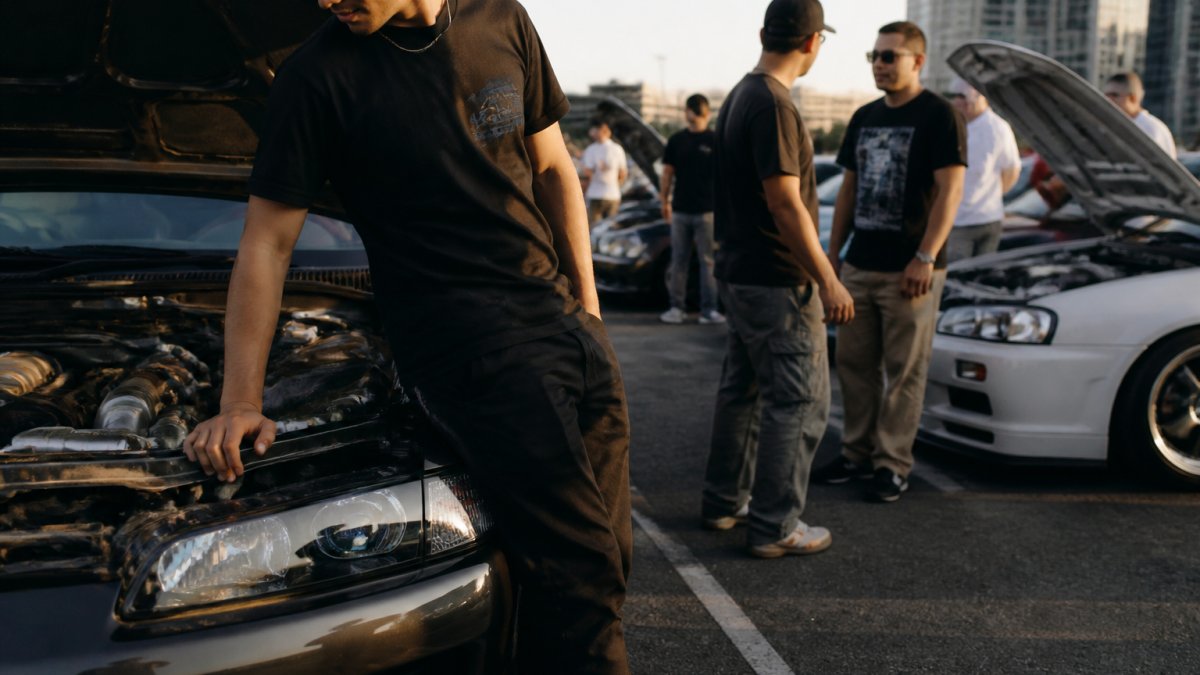
Four formulas work across builds, with the driving and fit details most guides skip:
- JDM: Graphic tee, tapered joggers, low-profile sneakers, a zip hoodie. Tapered joggers with a drawcord or elastic cuff keep the hem away from pedals; avoid wide-leg pants that catch on a clutch or brake pedal.
- Muscle: Plain or vintage-wash tee, straight-leg denim, a bomber jacket, boots or clean canvas sneakers. If you are shorter, a slight taper below the knee prevents pooling over boots.
- Euro: Fitted tee, slim chinos, a lightweight overshirt, minimal sneakers in one neutral tone. If you have larger thighs or a longer rise, size up and have the waist taken in rather than squeezing into a slim cut.
Notice the pattern. Every formula leans on one graphic piece and lets the rest stay quiet.
JDM, Muscle, and Euro: Matching Your Outfit to Your Car
Match your outfit to your car through tone and reference, not literal color-matching: JDM pairs with tighter silhouettes and technical fabrics, muscle with looser fits and vintage washes, Euro with clean, minimal lines and fewer graphics.
The mistake is going full theme. A single graphic tee that nods to your build reads better than a head-to-toe matching kit.
| Build Style | Base Layer | Bottoms | Outer Layer | Footwear |
|---|---|---|---|---|
| JDM | Graphic tee, tapered fit | Joggers | Zip hoodie | Low-profile sneakers |
| Muscle | Vintage-wash tee | Straight denim | Bomber jacket | Boots or canvas |
| Euro | Fitted plain tee | Slim chinos | Light overshirt | Minimal sneakers |
| Truck/SUV | Heavyweight tee | Cargos | Work jacket | Durable boots |
Driving Practicality: What to Avoid Behind the Wheel
Most outfit guides stop at the look. A car meet is also a drive, and a few clothing choices make driving uncomfortable or unsafe.
- Footwear: Thick-soled boots, platform sneakers, and slides make pedal feel vague. A flat sole with a rounded heel gives better control. If you love chunky boots, keep thin driving shoes in the car and swap before you leave the lot.
- Loose accessories: Long necklaces, dangling keychains, and oversized scarves can catch on a shifter or steering column. Tuck them in or leave them home.
- Restrictive layers: A stiff, oversized work jacket limits shoulder movement when you check blind spots. Look for a gusseted underarm or softer fabric.
Inclusive Fit Notes for Different Body Types
The formulas above work across genders and body types with small adjustments. The goal is a clean silhouette that lets you move and stand comfortably.
- Shorter frames: A slightly cropped jacket or a tee ending at the hip bone keeps proportions from looking swamped. Avoid long overshirts that hit mid-thigh.
- Taller frames: Look for tall sizes or brands that publish sleeve and body length. A tee that rides up when you reach for a hood latch is a fit problem, not a style one.
- Broader shoulders or chest: Size for the shoulders first, then have the waist taken in. A straight cut beats a slim cut that pulls across the chest.
A common pattern is to buy one size up and tailor down. That works for tees and chinos, but not joggers with a fixed elastic waist; for those, check the size chart against a pair you already own.
What to Wear to a Car Meet: A Practical Breakdown
Most meets run in the evening, and parking lots get cold fast once the sun drops. A hoodie or light jacket solves that without adding bulk.
Accessories stay minimal: sunglasses, a plain cap, and a watch. Anything more competes with the cars, and the cars are the point.
Practicality matters more than most guides admit. Avoid dangling accessories near open hoods, skip loose sleeves if you lean over an engine bay, and choose grippy shoes if the lot is wet.
Automotive Streetwear Styling Tips for Everyday Wear
Automotive streetwear styling tips for daily wear follow one rule: treat the car reference as an accent, not the whole outfit.
Layering is where most people improve fastest. A tee under an overshirt, or a hoodie under a jacket, gives you range from a cold morning to a warm afternoon.
Our approach at Midnight Motor Club is simple: start with pieces you can wear in different seasons.
Fit, Fabric, and Weather: Getting the Details Right
Fit should follow the fabric. Heavyweight cotton holds a boxier shape; lighter cotton drapes closer.
Fabric choice decides how the piece survives. Look for cotton with visible weight and prints that sit into the fabric rather than on top of it.
"Built For Street" Car Culture Tee →
Weather changes the plan. In summer, a single tee and shorts work. In winter, a heavyweight tee under a hoodie and jacket keeps the graphic visible indoors while you stay warm outside.
How to Spot Car Enthusiast Clothing Brands Worth Buying
Car enthusiast clothing brands worth buying share three traits: they can explain their materials, they use real automotive references, and their designs work outside a car event. If a brand cannot tell you what the shirt is made of, that is your answer.
The deeper signal is subculture literacy. A brand that understands motorsport, tuner, vintage-car, or luxury-car scenes uses references that feel specific rather than generic: a period-correct racing sponsor layout, a garment-dyed finish echoing faded team gear, or a cut borrowed from garage workwear rather than fast-fashion streetwear.

Ask these questions before you spend:
- Can the brand name the fabric weight and print method?
- Do the designs reference real car culture rather than generic clip art?
- Would you wear the piece somewhere other than a car event?
The last item matters more than it sounds. A brand that tells you exactly how to wash a garment expects it to last.
Subculture Signals: Motorsport, Tuner, Vintage, and Luxury
Different automotive scenes produce different visual languages. Knowing them helps you judge whether a brand borrows a reference or just prints a car shape.
- Motorsport: Look for sponsor-style typography, contrast color blocks, and patch placement that mimics race suits or team jackets. Brands that understand this scene use embroidery or woven patches rather than flat prints.
- Tuner and drift: Expect graphic tees with build-specific humor, technical fabric references, and a tighter, athletic silhouette, including references to tire wear, boost, and late-night meets. If the humor feels written by someone who has stood in a parking lot at 1 a.m., that is a good sign.
- Vintage car culture: Garment-dyed and washed finishes, retro fonts, and muted palettes. The best pieces look like they have been through a few summers without artificial distressing.
Construction Details That Separate Good From Disposable
Beyond the checklist, look at how the garment is built. These details are visible in product photos and descriptions if you know what to look for.
- Fabric weight: A heavyweight cotton tee (often 6 oz or 7 oz) holds its shape better than a thin 4 oz tee. For layering, a midweight tee is more comfortable under a hoodie.
- Stitching: Double-needle hems and shoulder-to-shoulder taping resist stretching; a single-needle hem is a sign of cost-cutting.
- Print method: Screen printing sits on top of the fabric and can crack; discharge or water-based printing dyes the fabric and fades more naturally. DTG is common for small runs but can feel stiff on heavy cotton.
Budget and Secondhand: Building the Look Without Full Retail
You do not need to buy everything new. The automotive streetwear look is built on workwear and vintage references, which makes secondhand a natural fit.
- Thrift and vintage stores: Look for plain heavyweight tees, work jackets, and flannels to layer under graphic pieces. A faded mechanic's jacket often reads more authentic than a new fashion version.
- Online resale: Search for specific fabric weights and brands known for durable blanks. Measure a shirt you like and compare those numbers to listings rather than trusting tagged sizes.
- Blank tees plus one graphic piece: Buy quality blank tees in neutral colors and spend your money on one or two graphic pieces that carry the automotive reference. This keeps the outfit from looking like a walking billboard.
Long-time enthusiasts often keep a small rotation: two or three graphic tees, one or two plain heavyweight tees, a hoodie, a jacket, and two pairs of bottoms. That covers most meets and daily driving without overflowing a closet.
Building a Wardrobe That Lasts: Materials and Care
A wardrobe that lasts starts with fewer, better pieces. Three or four graphic tees, two pairs of bottoms, one hoodie, and one jacket cover most of the year.
Care extends the life more than price does. Wash graphic tees inside out in cold water, skip the dryer, and hang them to dry.
Our tees at Midnight Motor Club are built around that idea: clean designs, honest materials, and graphics. The "Built For Street" Car Culture Tee is a good starting point if you want one piece that works at a meet and on a normal day. If your build is a truck or SUV, the "Make A Statement" vintage SUV graphic tee uses a garment-dyed finish that hides wear. For a [lighter, funnier option, the I Have a Slight Tire Problem racing tee covers the drift and motorsport](/products/i-have-a-slight-tire-problem-funny-racing-t-shirt) side.

Sizing detail helps here too. Our tees run from S to 4XL with published width and length measurements, so you can measure a shirt you already own and match it rather than guessing.
Frequently Asked Questions
What should I wear to a car meet?
Start with a graphic tee that reflects your car interests, paired with well-fitted joggers or dark denim. Add clean sneakers and a lightweight jacket for layering. Avoid anything too formal or restrictive since you'll be walking, crouching to check builds, and standing for hours. Comfort and authenticity matter more than chasing trends.
How do you style automotive streetwear without looking like you're trying too hard?
Keep it simple. One automotive piece per outfit, like a graphic tee or a branded cap, paired with neutral basics. Let the design speak for itself instead of stacking multiple car-themed items. Fit matters more than logos, so make sure your clothes actually fit your body rather than drowning in oversized everything.
What makes an outfit look automotive-inspired?
Automotive-inspired outfits pull from car culture aesthetics: clean lines, functional fabrics, and subtle nods like racing stripes, vintage logos, or garage-style graphics. Color coordination often mirrors car paint palettes, think deep blues, matte blacks, and racing reds. The key is referencing car culture without turning yourself into a billboard.
How can I dress comfortably for an outdoor car meet?
Choose breathable fabrics like cotton or cotton blends for warm weather, and layer with a hoodie or jacket for evening meets. Wear broken-in sneakers or boots you can stand in for hours. Avoid tight jeans or stiff clothing. If the meet runs late, bring a light jacket since temperatures drop once the sun goes down.
What shoes are best for a car meet?
Clean sneakers work for most meets, especially low-profile styles that match the minimalist look. For rugged or off-road builds, boots or trail sneakers fit the vibe better. Avoid anything you'd wear to the gym or dress shoes. The goal is footwear that looks intentional and handles standing on pavement for hours.
How can I wear car-themed clothing without looking over the top?
Balance is everything. Pair a bold graphic tee with plain pants and simple shoes. Skip matching car-themed hats, socks, and jackets all at once. If your shirt has a loud design, keep everything else understated. One statement piece reads as confident; five reads as costume.
Do car enthusiast clothing brands actually last longer than generic options?
It depends on materials and construction. Brands that use garment-dyed cotton, reinforced stitching, and quality screen printing tend to hold up well through repeated washing. Check for details like double-stitched hems and print methods before assuming price equals quality.
Car culture style only works when the gear actually holds up. Cheap prints crack, thin cotton shrinks, and a shirt that looked right in photos looks tired after three washes.
At Midnight Motor Club, we build apparel for people who live for the drive: clean designs, honest materials, and graphics that survive real wear. Browse our car culture tees, find your fit, and add a piece that works at the meet and everywhere after.